

Master openings.
Chessbook helps you choose the right openings for your level and style, then learn them fast.
No signup required


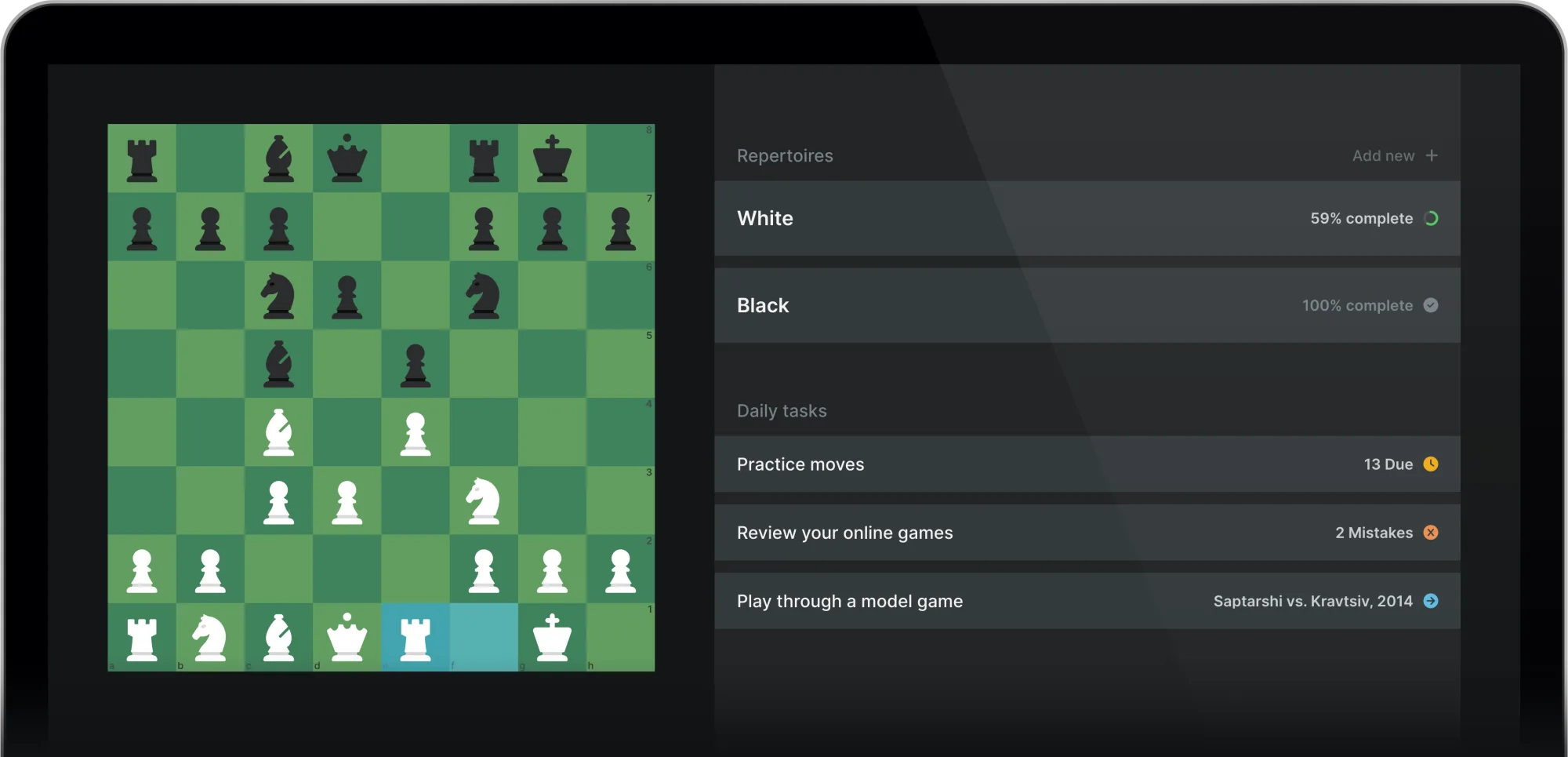
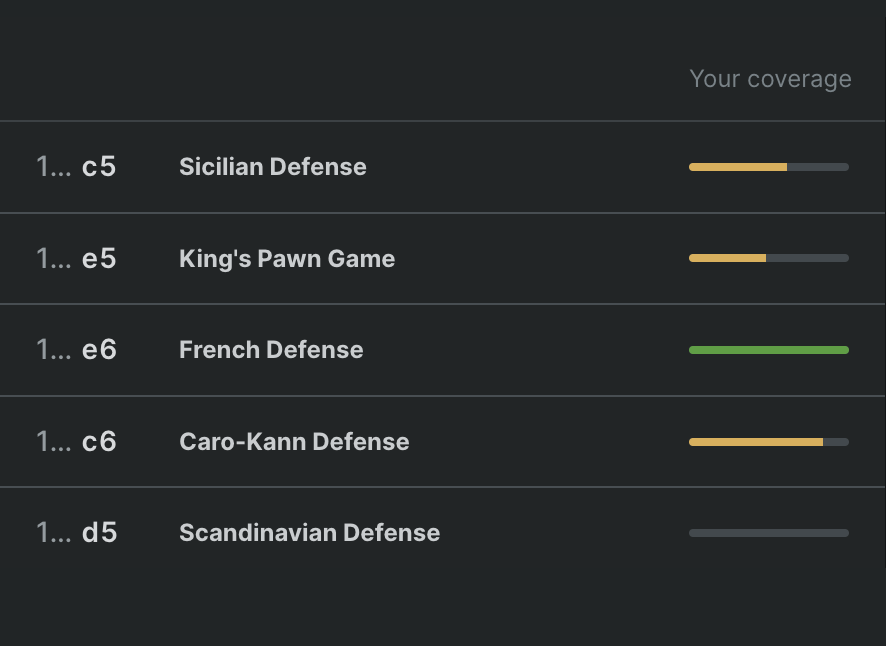
Find the gaps in your openings before your opponents do
Chessbook calculates your coverage per opening so you always know what to work on.
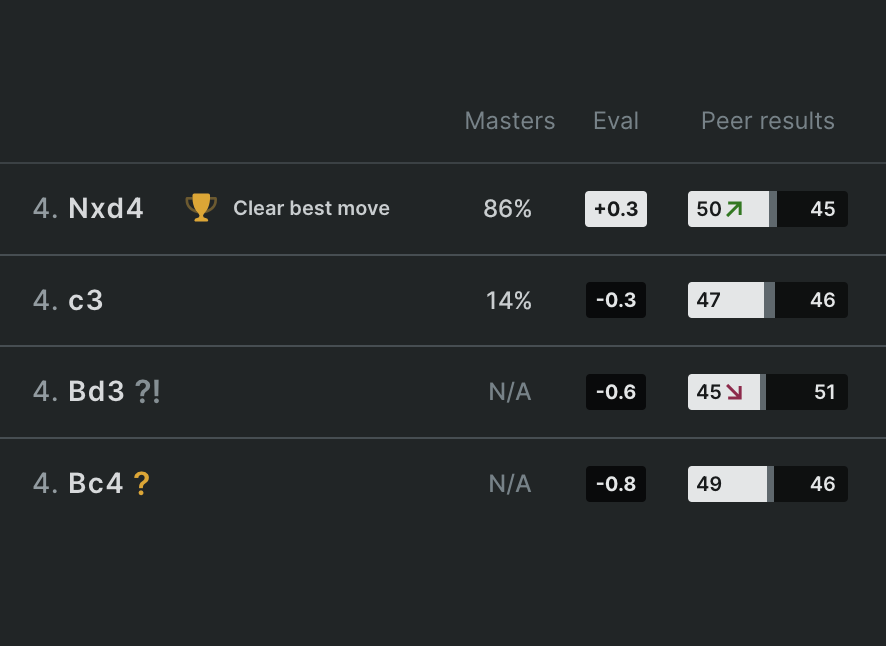
Pick the best moves to maximize your win-rate
Weigh up your options by looking at stats from master games, engine evaluation and results at your level.
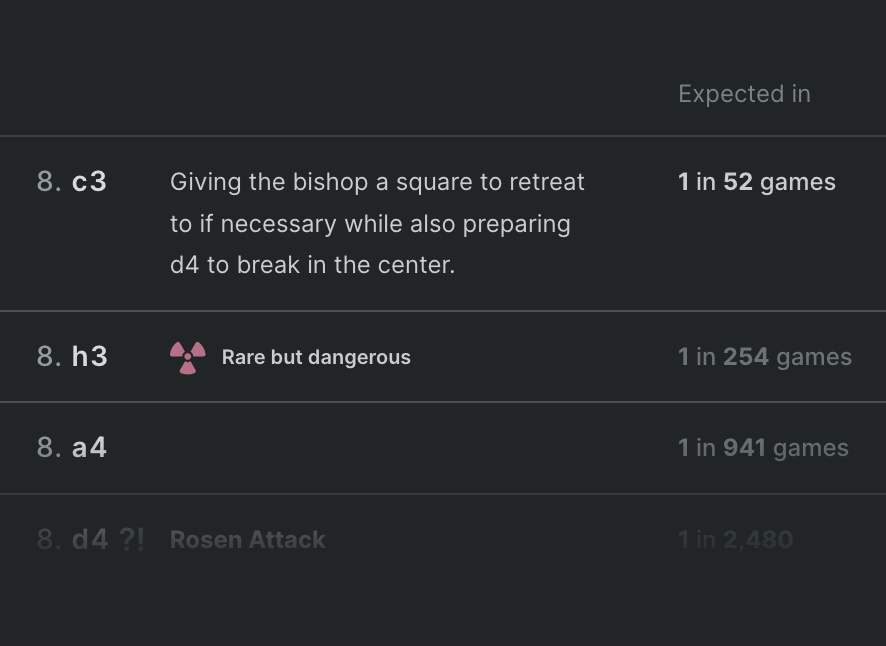
Only spend time on the moves you'll actually see
Most books and courses are written by masters for masters. Chessbook lets you avoid obscure grandmaster lines and focus your effort on the moves that are common at your level.
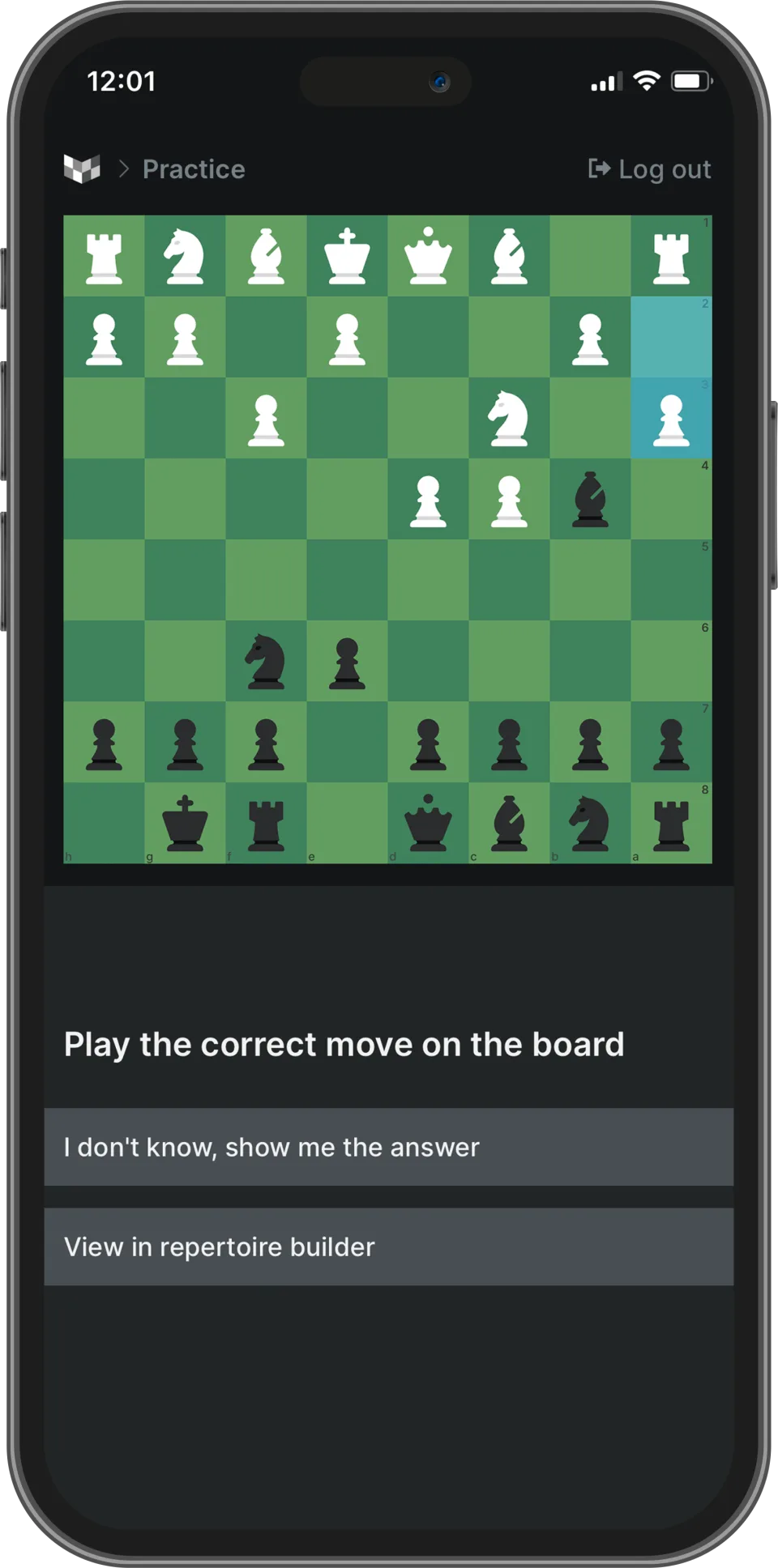
Targeted practice means you'll never forget a move
Chessbook uses spaced repetition, a scientifically proven technique to memorize openings quickly and thoroughly.
Collect all your openings in one place
Nobody gets all of their openings from a single course or book. Chessbook lets you combine openings from multiple sources to create a custom repertoire just for you.

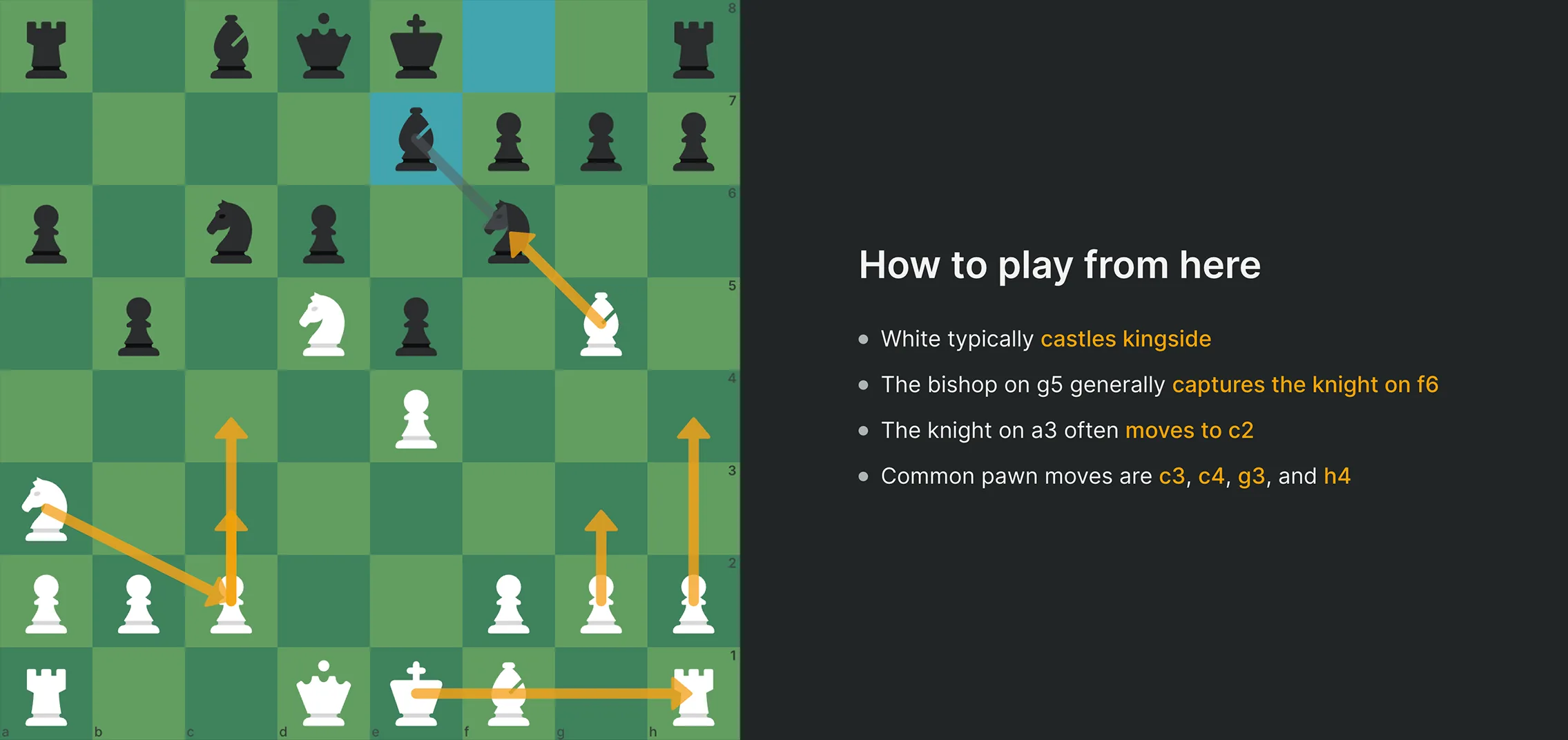
Learn middlegame plans for any opening
See how top players handle the positions that result from the openings you play.
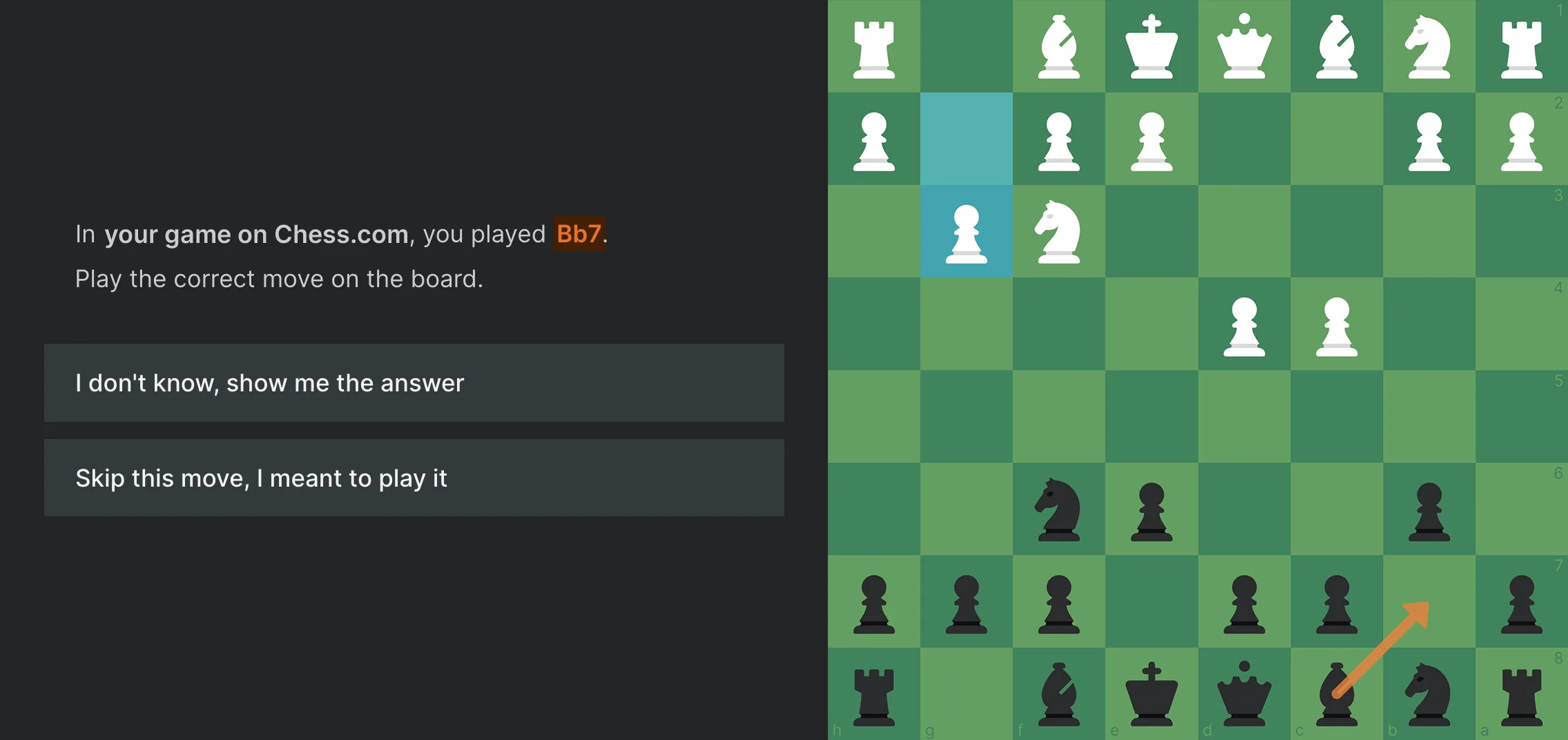
Find mistakes in your online games
Connect your Chess.com or Lichess account to get instant feedback when you play the wrong move.
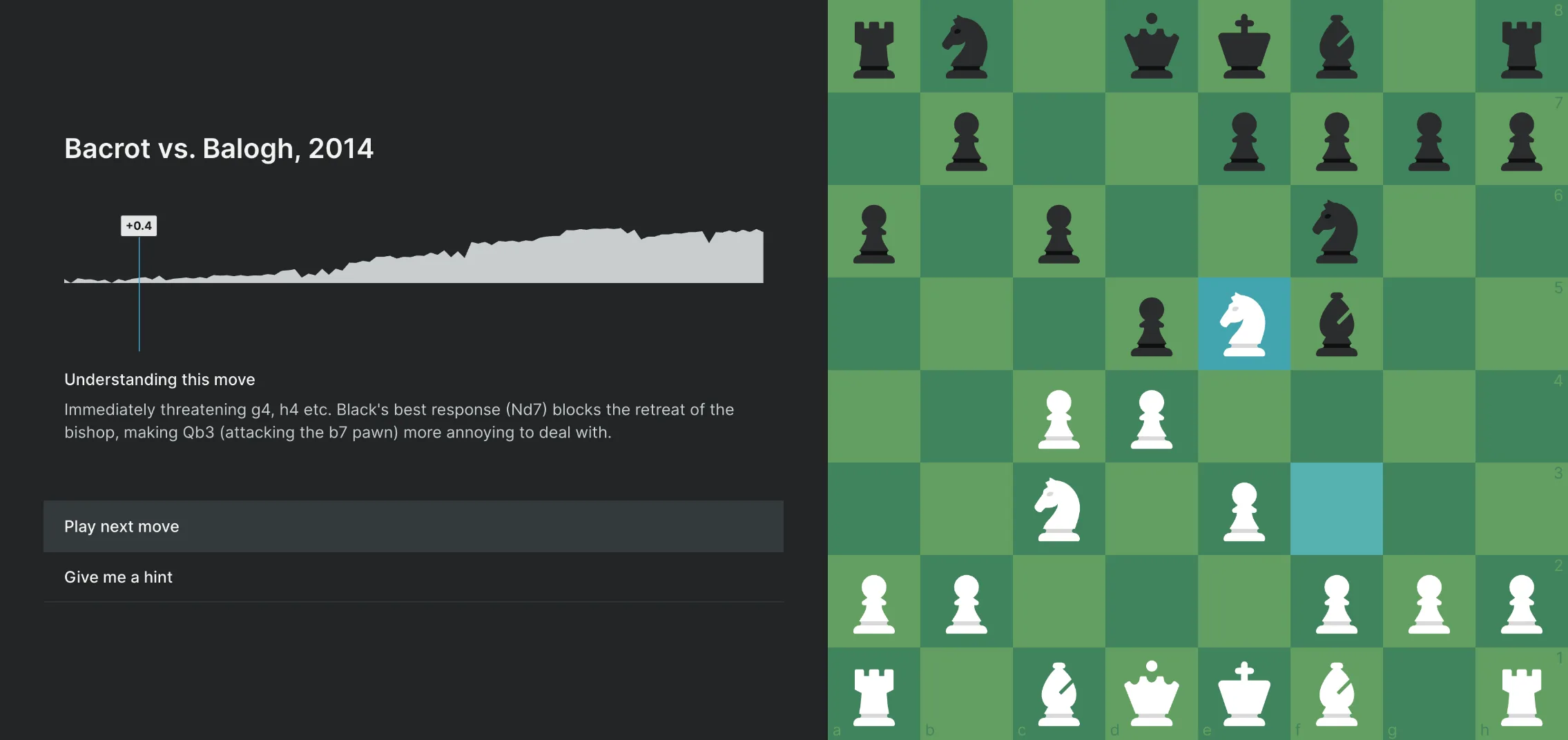
Play through model games that follow your openings
See how masters handle the openings you play and "guess the move" as you go.
Endorsed by masters, loved by adult improvers
"A fun and simple way to build an opening repertoire based on probabilities of most likely lines.
You will actually learn the moves that will happen on the board!"

"The only tool I use for tournament prep now. Drilling variations before games just became easy.
Priceless for building and easily studying a repertoire, and it works for all levels!"

"Absolutely amazing and unlike what anybody else has developed.
It's exactly what I've wanted since I started playing seriously."
Get started for free, no signup required
Start learning openings now with our free starter plan.
Pro
$7
per month, billed annually
Add unlimited moves to any depth.
Try it for freeNo signup required, cancel anytime
Frequently asked questions
What is an "opening repertoire"?
An opening repertoire is a set of pre-planned moves for the early part of a chess game. A complete repertoire will include responses to all of the opponent's potential moves during this phase of the game.
What's the benefit of having one?
Having a well constructed repertoire that fits with your style can be a huge advantage. It can let you steer the game toward positions you are comfortable in and enjoy playing, improving your results.
What's the difference between an "opening repertoire" and an "opening"?
An opening repertoire consists of multiple openings to combat different moves by the opponent. For example an e4 player will need to learn different openings to deal with the Sicilian, French, Caro-Kann etc.
What's the difference between an "opening" and a "line"?
A line is a sequence of moves, one after another. An opening is made up of many lines. For example, someone who plays the Sicilian Dragon will need to learn many individual lines to master that opening.
I'm new to chess, do I need to learn openings?
While having a solid repertoire becomes more important as you improve, even beginners can benefit from having a simple opening repertoire that prepares them for common moves at their level.
What's involved in learning a repertoire?
Learning a repertoire generally consists of choosing which openings and lines to play, memorising specific sequences of moves and understanding why those moves are played.